
By
Andy Candela
February 3, 2026
6 minutes
Blockchain technology is fundamentally changing how we think about money, and nowhere is that more evident than in lending and borrowing. Gone are the days of rigid, bank-dependent processes. Today, decentralized finance (DeFi) protocols are enabling peer-to-peer lending with automated terms enforced by smart contracts. Platforms like Aave, Morpho, and Compound have paved the way, creating liquidity pools where anyone can supply crypto assets to earn interest or borrow against their digital holdings—all without the need for traditional credit checks.
This evolution holds immense promise for financial inclusivity, especially for the millions of unbanked and underbanked individuals around the world. As the World Bank has pointed out, blockchain-based solutions can serve these underserved populations by providing new pathways to financial services. The potential is clear: a more open, transparent, and efficient credit market for everyone.
However, as any worthy goal, there are challenges:
Despite the powerful opportunities, the current DeFi lending landscape presents a significant challenge: a fragmented and inefficient user experience. Borrowers often have to manually track and compare interest rates across multiple protocols.
Furthermore, due to high market volatility, users are forced to over-collateralize their loans to avoid liquidation. This leaves a substantial amount of capital sitting idle, or "dormant," and unproductive.


In the world of DeFi, you'll hear the term "Free Financing," but it's important to understand what it truly means. Nothing is ever completely free. Instead, it's about offsetting the cost of borrowing with another mechanism. The most powerful example is the Self-Repaying Loan.
Here’s how it works:
The result is a seemingly "free" outcome - over time, your loan pays for itself, and you eventually get your original collateral back with the debt cleared.
Our collaboration with an emerging DeFi lending protocol is a prime example of an efficient architecture built to enable this concept.
When the project kicked off in 2021, the founders had an ambitious but very clear vision: to build a DeFi platform that puts your loan on autopilot. The core idea was to optimize loans by automatically switching to the lending provider with the best rates and to programmatically repay debts using the users’ own excess borrowing capacity for yield farming.
The development team realized this vision by engineering a seamless middleware layer that enhances the entire lending ecosystem. It connects users to major lending providers like Aave, Morpho, and Compound. It streamlines the entire process, saving users time and ensuring they always benefit from the most favorable loan conditions while optimizing their capital.
As the foundational technology partner, LimeChain engineered the client’s smart contract ecosystem and backend automation from concept to launch. We developed a sophisticated system of over 40 smart contracts and automated bots that put user loans on autopilot. The solution actively manages positions, switches between lending providers for the best rates, rebalances collateral to mitigate liquidation risk, and deploys excess capital into yield-farming strategies to auto-repay the loan.
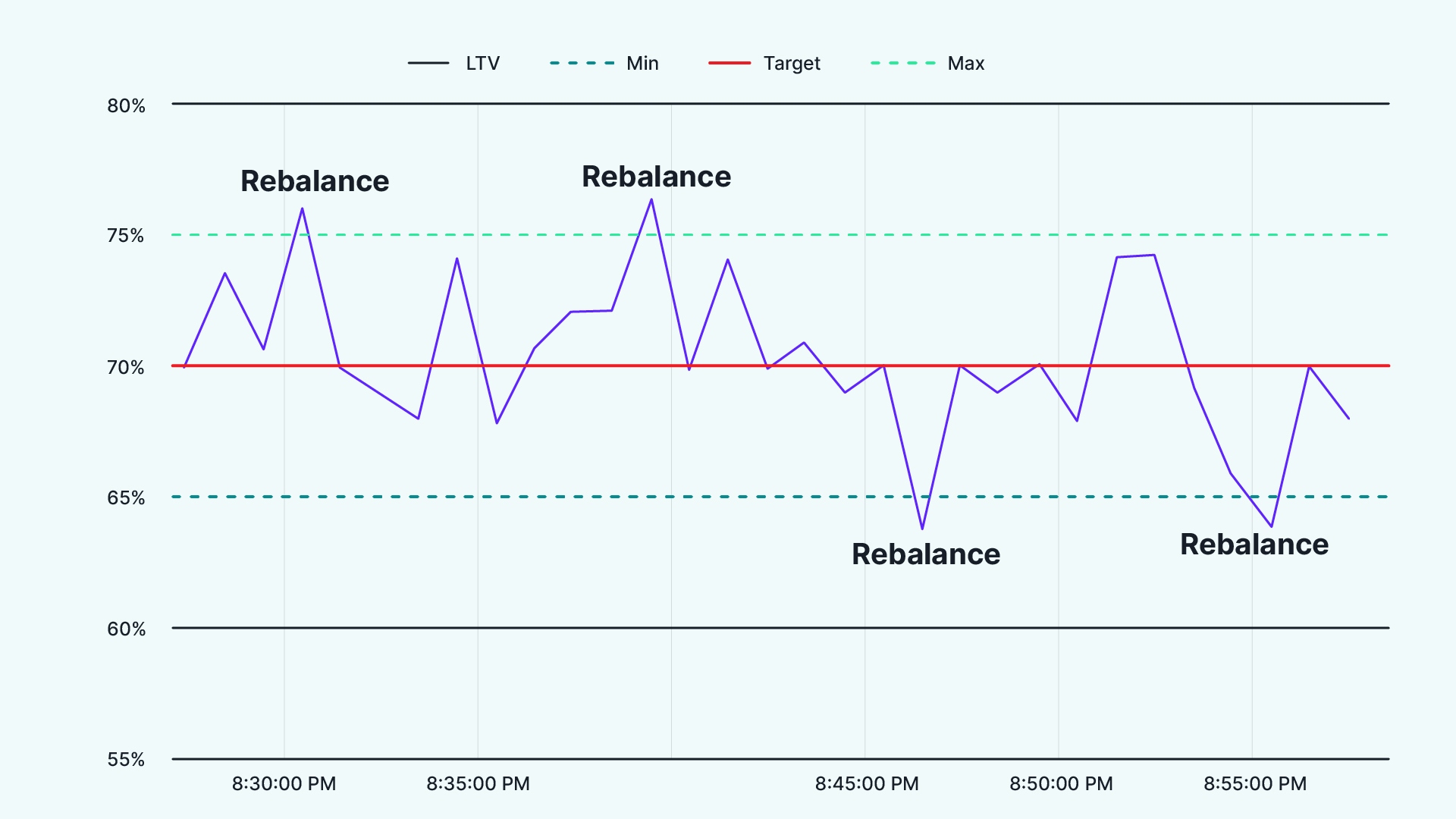
The protocol incorporates three key features to achieve its goals:
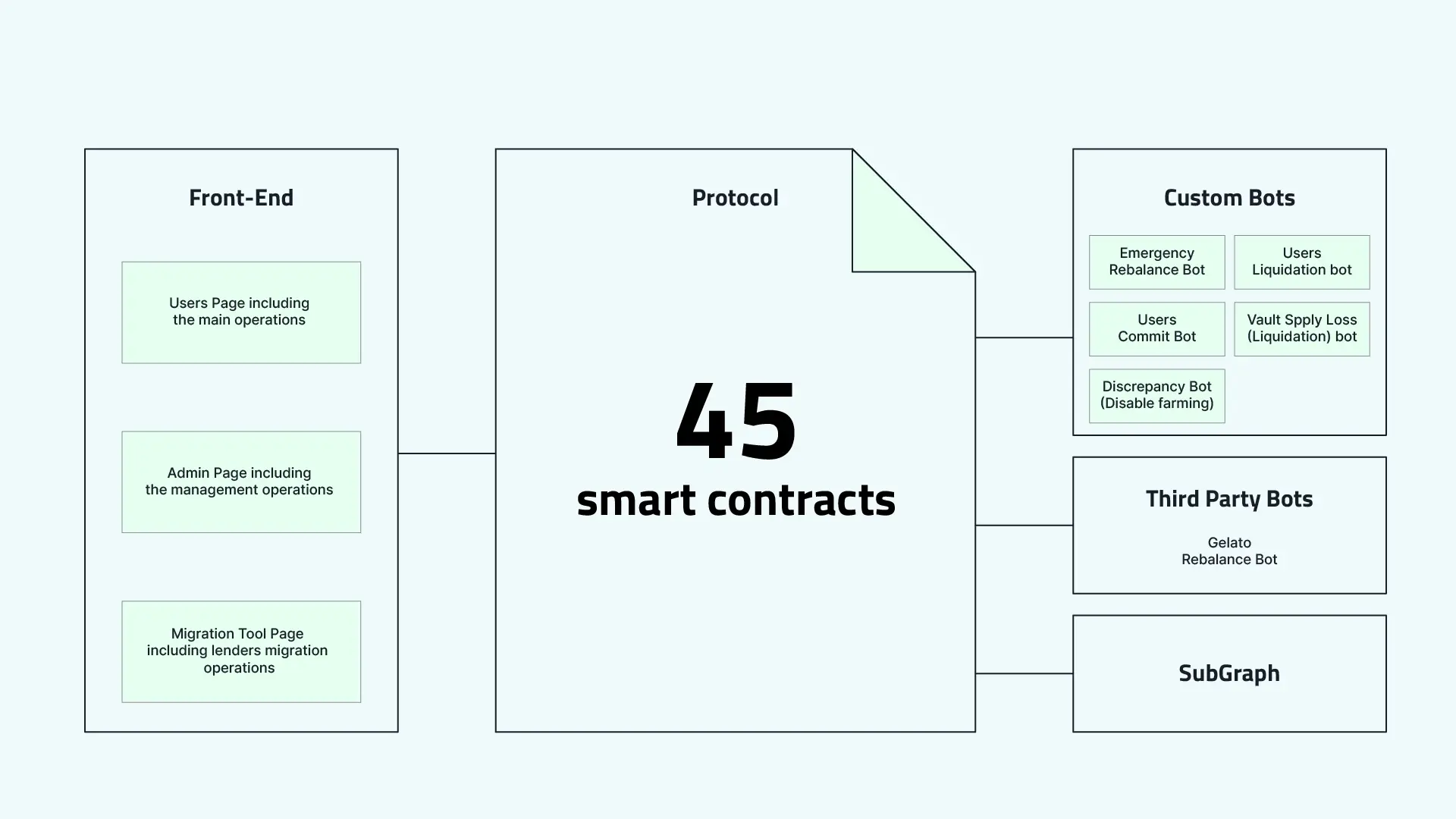
To achieve this level of automation and efficiency, we built a robust system with a comprehensive tech stack and toolchain.
The successful development and launch of sophisticated financial products like this protocol is a clear indication of the user-centric evolution that the DeFi landscape is undergoing - a transformation we're incredibly fortunate to be a part of.
— Nick Todorov, co-founder and CEO of LimeChain
This project is a powerful example of how a well-defined vision, combined with expert architectural and development support, can solve a core pain point in the DeFi space. It's not just a platform - it's a solution that gives users control and confidence, allowing them to participate in decentralized finance in a smarter, more capital-efficient way.
"Free financing" refers to a self-repaying loan mechanism where the cost of borrowing is offset by yield generation. You deposit yield-bearing collateral (like staked Ether), borrow against it, and the protocol automatically uses your excess borrowing capacity to generate yield that pays down both the principal and interest over time.
The protocol addresses two major DeFi challenges: the fragmented user experience of manually comparing rates across multiple lending platforms, and capital inefficiency caused by dormant collateral sitting idle due to over-collateralization requirements.
Smart contracts continuously monitor lending providers like Aave, Morpho, and Compound, automatically switching your position to whichever platform offers the most favorable terms. This active loan management happens without any manual intervention required from you.
Loan-to-Value (LTV) rebalancing is a mechanism that intelligently manages your collateral buffer. Instead of leaving large amounts of capital dormant to avoid liquidation, the protocol carefully utilizes your full loan potential to generate returns while maintaining safety margins, making your capital work harder for you.
The protocol integrates with major DeFi lending providers including Aave, Morpho, and Compound. It also leverages integrations with Curve, Uniswap, and Chainlink to optimize yield farming strategies.
The platform is built on a robust tech stack including React for the frontend, Solidity for smart contracts, and TypeScript/Node.js/Express for the backend. The system comprises over 45 smart contracts, custom bots for automation, and specialized tools including an SDK, test engine, migration tool, and transaction manager.
The protocol automatically invests your excess loan capacity into yield farming strategies. The generated yield is then harvested and applied directly to your loan repayment, creating a continuous cycle that gradually pays down your debt without requiring additional capital from you.
As the foundational technology partner, LimeChain engineered the entire smart contract ecosystem and backend automation from concept to launch. This included developing over 40 smart contracts, automated bots for position management, and all the infrastructure needed to put user loans on autopilot.
Or just shoot us a message on Telegram


